Tectonic Garden

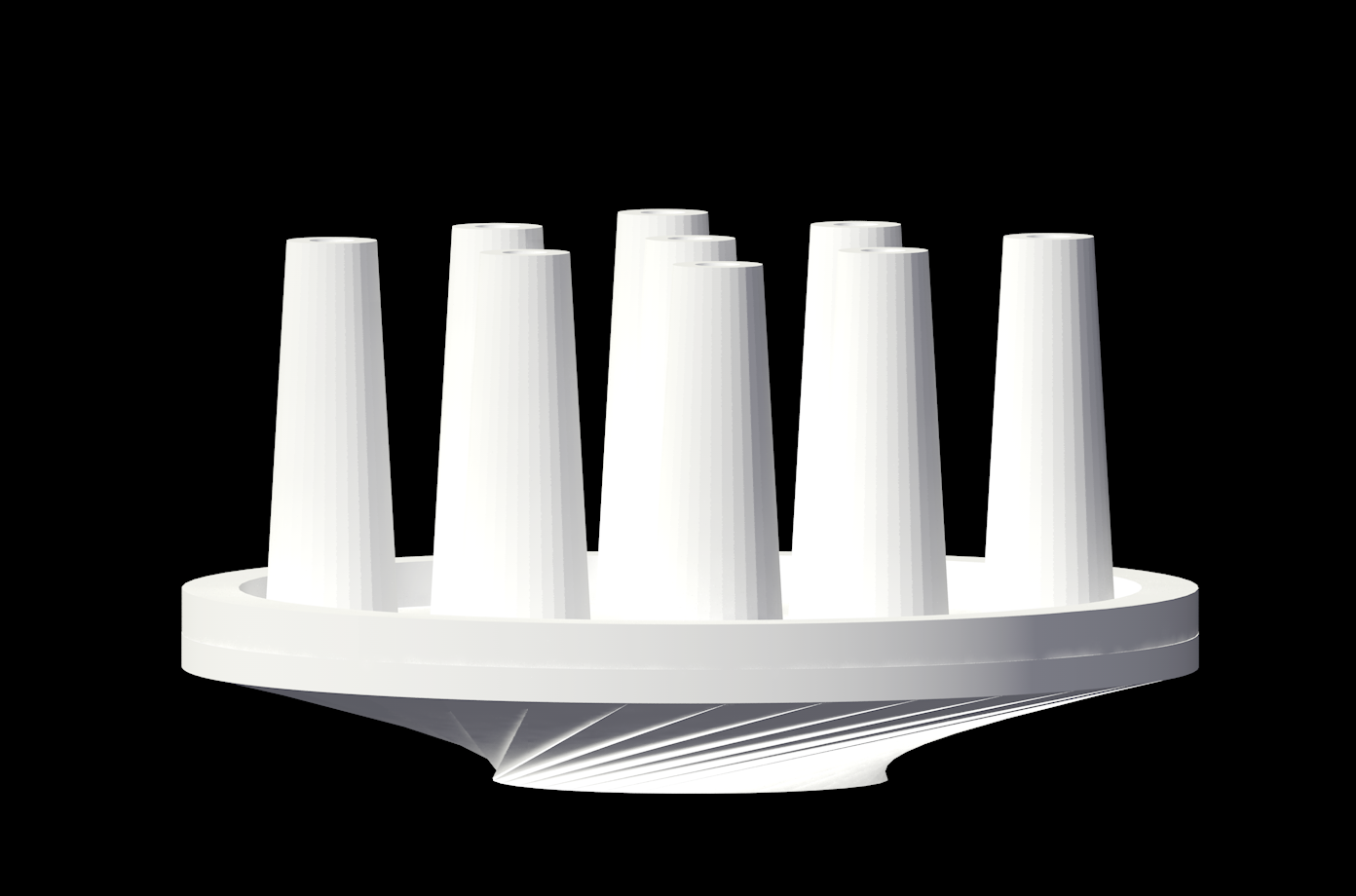
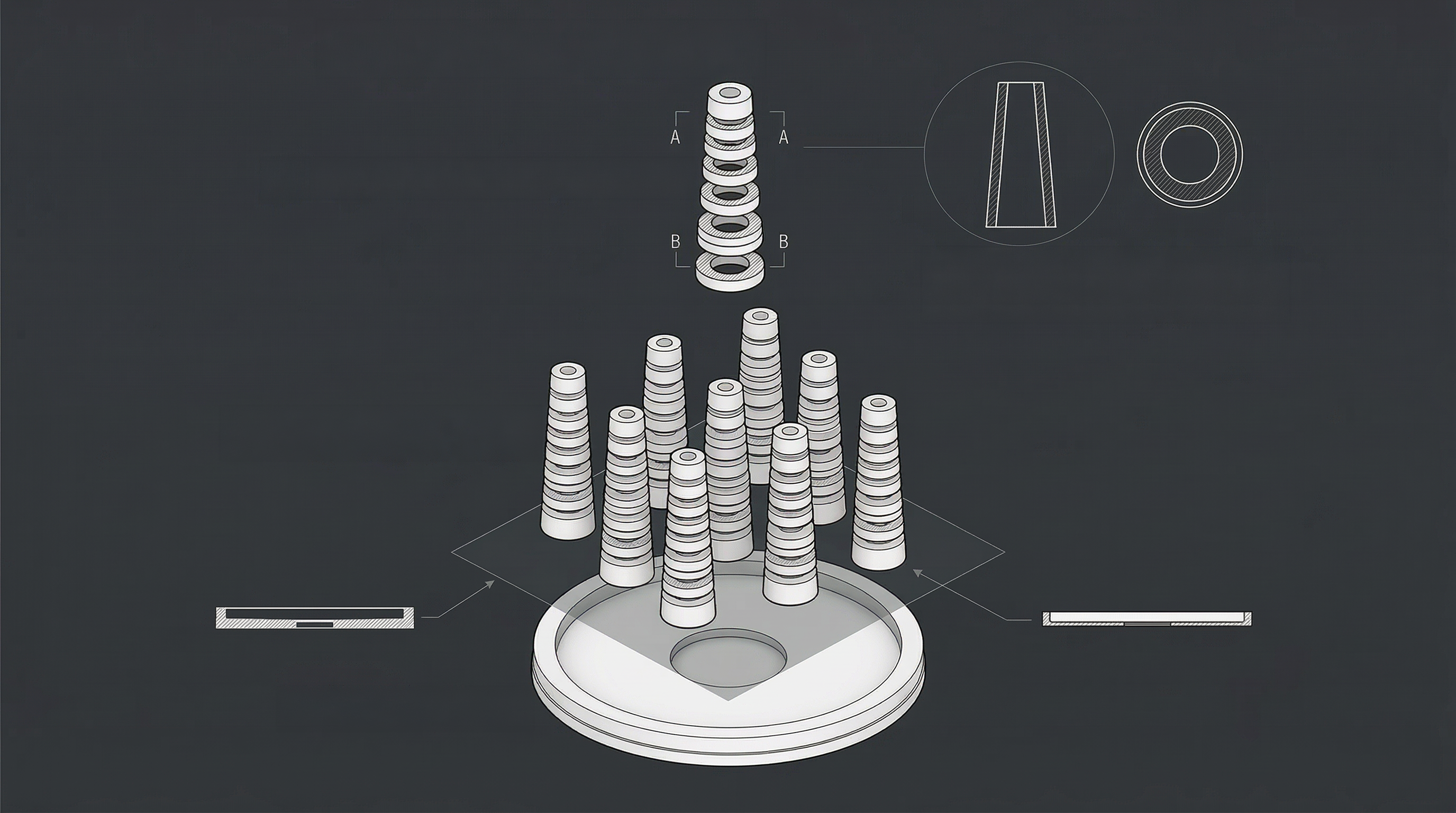
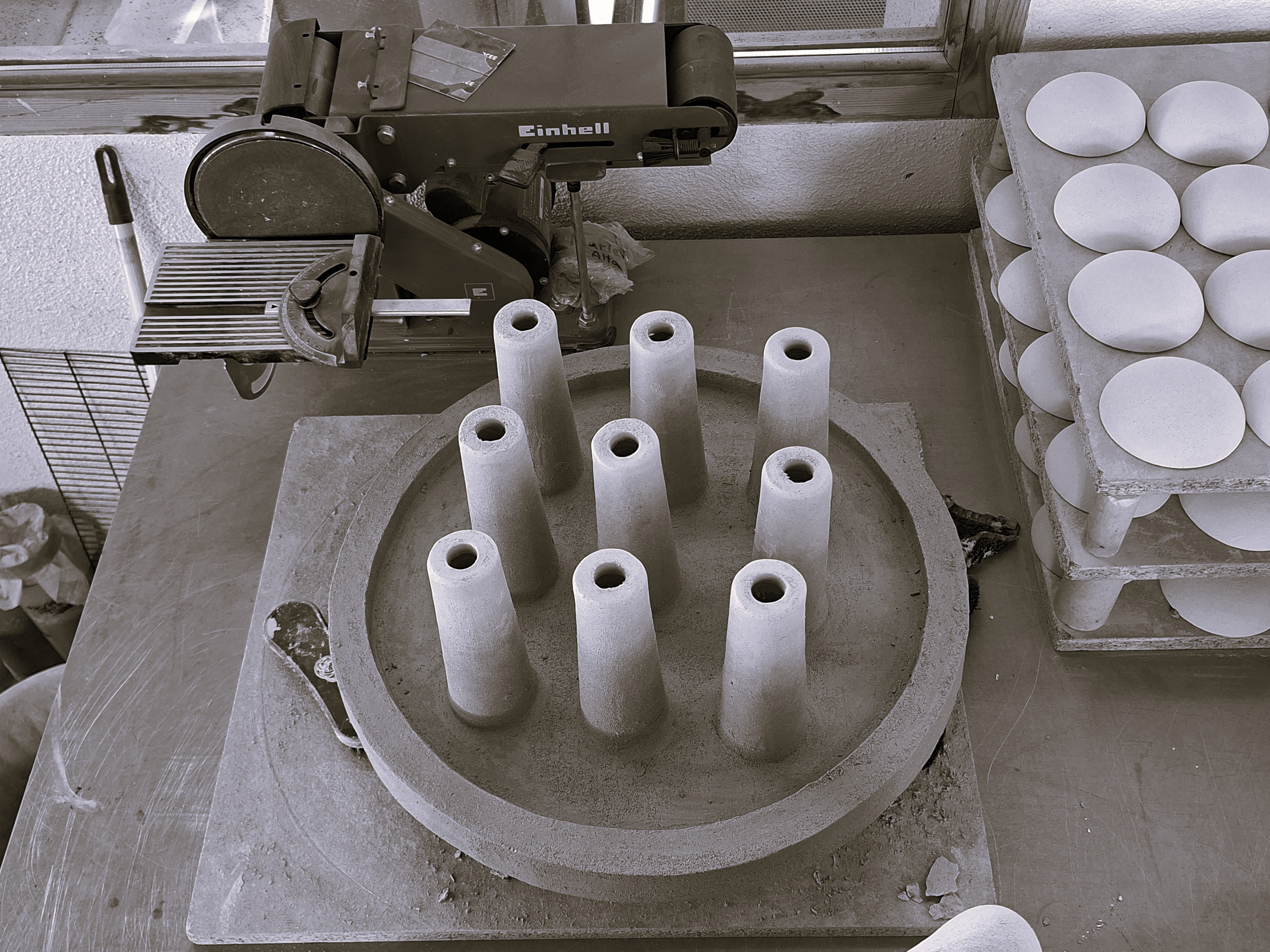
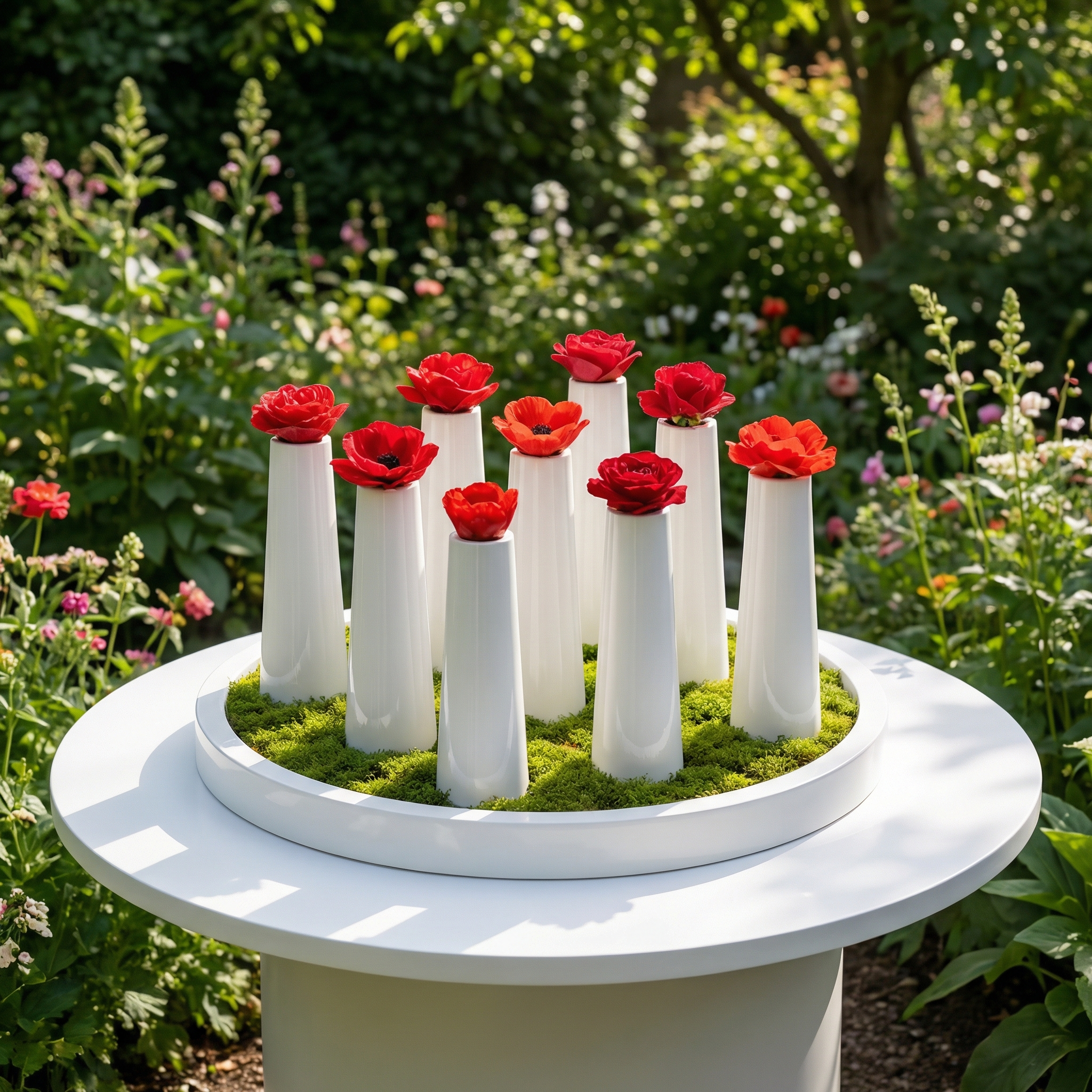
One hundred years after the 1927 Parlor Gardens exhibition, TECTONIC Garden reinterprets the dialogue between nature and the built environment for our post-industrial age. Where Rubió i Tudurí, Dufy, and Artigas created miniature sanctuaries that brought the garden into domestic space, this work invites reflection on how cities themselves have become a new form of nature—brutal, elemental, and perpetually transforming. The installation comprises nine ceramic flutes rising from a circular base, their industrial forms echoing the cooling towers, smokestacks, and infrastructural monuments that define our urban horizons. These structures, once symbols of fossil fuel dependency and private industrial power, stand reimagined as vessels for ecological renewal.

In this transformation lies the work's central proposition: that the tectonic landscapes of decline—vacant lots, abandoned infrastructure, post-industrial sites—are not voids but fertile ground for cultural and ecological rebirth. Drawing from principles of biourbanism, TECTONIC Garden positions the city not as nature's opposition but as its contemporary expression.

Just as natural ecosystems undergo succession, urban areas decline and renew in response to shifting technological, industrial, and social forces. The brutalist beauty of sameness and function becomes a canvas for ecological imagination. Each flute is filled with water and crowned monthly with a carefully selected flower species, their stigma and stamens—those essential organs of reproduction and life—reaching upward from industrial forms. This curatorial act acknowledges the gardener's vital role in shaping urban nature. As flowers bloom and fade, the cycle of life and death becomes visible, integrated into the work's aesthetic experience. The gardener replaces spent blooms, maintaining the garden while allowing natural processes to unfold.

The circular base, layered with moss, represents how ecological systems quietly colonize disused spaces, transforming concrete and steel into living substrates. This ground-level transformation mirrors larger movements toward adaptive reuse—the conversion of private infrastructure into public parks, cultural facilities, and community resources. In the exhibition's final month, the gardener gains full creative license, selecting any combination of species for the nine flutes.

This gesture dissolves the boundary between designer and caretaker, acknowledging that both roles are essential to the garden's existence. The work becomes a collaboration across time—between the original vision, monthly curatorial decisions, and nature's own unpredictable vitality. TECTONIC Garden thus completes a circle begun a century ago: from the parlor garden that brought nature into the home, to the contemporary recognition that our cities, in all their brutalist grandeur and industrial decay, have become landscapes where nature and culture continuously remake one another.

Making of Tectonic Garden